

Pool tile and coping
Sarasota Pool Refinishing is a guide run by Terragroupe, LLC. We do not resurface pools or do any pool work, and we are not taking requests yet. A licensed pool contractor does this work, and we are lining one up.
Waterline tile is the band of tile where the water meets the wall, and coping is the cap along the pool's edge. They often get looked at during a resurface, because the pool is already drained. Decide before work starts whether yours will be kept, cleaned, repaired or replaced, and get that in the written scope.
Sarasota Pool Refinishing is a guide run by Terragroupe, LLC. We do not resurface pools or do any pool work, and we are not taking requests yet. A licensed pool contractor does this work, and we are lining one up.
Last reviewed October 18, 2026 against the cited sources. A guide, not legal, tax or engineering advice.
Updated . Sources
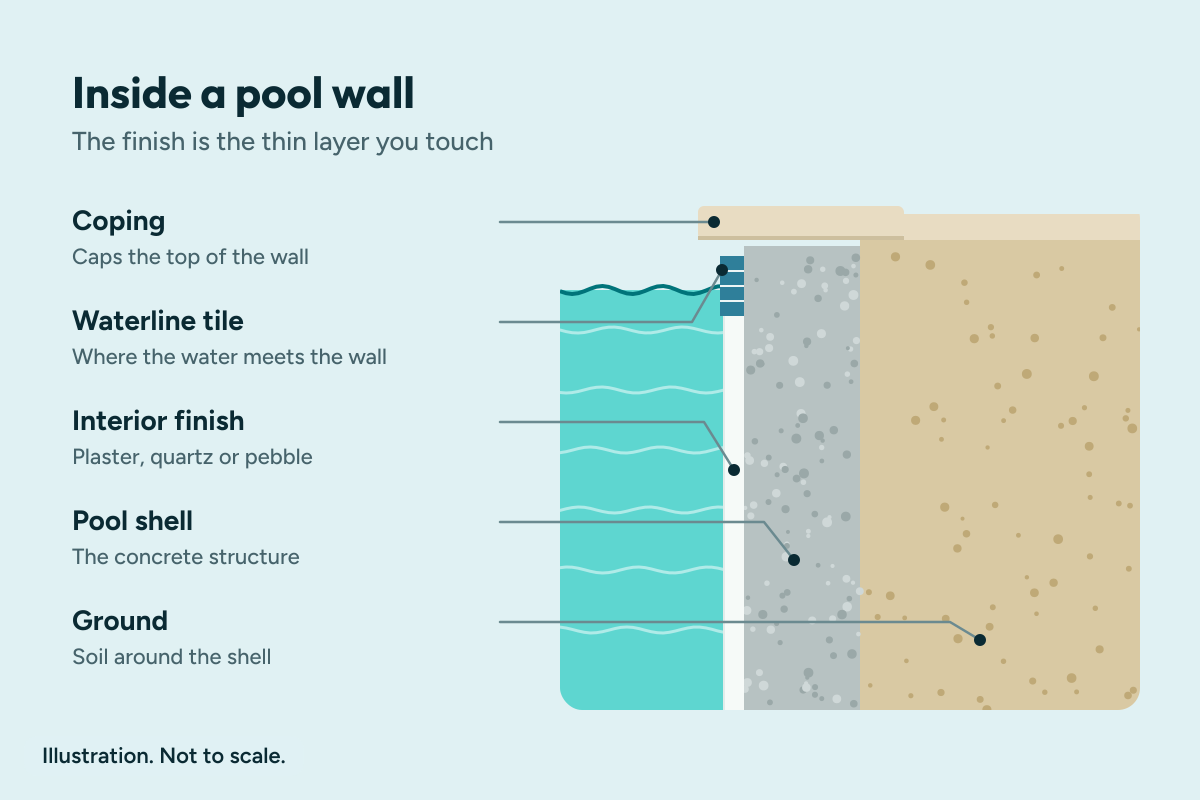
Tile, coping and the finish
Several parts of your pool wear: the interior finish, the tile at the waterline and the coping on top of the wall. A resurface replaces the finish. The tile and coping may or may not be part of the job, so ask.
Some pools are tiled all over instead of plastered. Bob Vila's guide says a full tile finish lasts about 20 years (national guide figure)1, an older national figure for a tiled interior, not for a waterline band alone.
Signs the edge needs work
- Tiles that are loose, cracked or missing.
- Grout that has washed out between tiles.
- A crusty white or gray line at the waterline that will not clean off.
- Coping stones that rock, have cracked, or have gaps under them.
- A gap opening between the coping and the deck.
Why the timing matters
Tile and coping are easiest to work on while the pool is drained. If the waterline tile is near the end of its life, replacing it later can mean draining the pool a second time. That is worth weighing up front.
If the tile is sound, ask how the contractor will protect it while the new finish goes on.
Settle it in writing
- Which tile and coping work is included: none, cleaning, repair or replacement.
- The tile or stone to be used, by name, if anything is replaced.
- What happens if more tiles come loose once work starts.
- Who is responsible for any deck damage near the coping.
- How the price changes if the scope grows.
Where the line is
Florida's pool contractor scopes cover the repair and servicing of pools, including interior finishes 2. Ask whether the tile and coping work falls under the contractor's license, or whether someone else does it.
Deck and patio slab repair is outside what this guide covers. A gap between coping and deck can point to movement, so ask a licensed contractor to look at it.
From a rough surface to a written scope
Look at the pool first. The finish choice comes after.
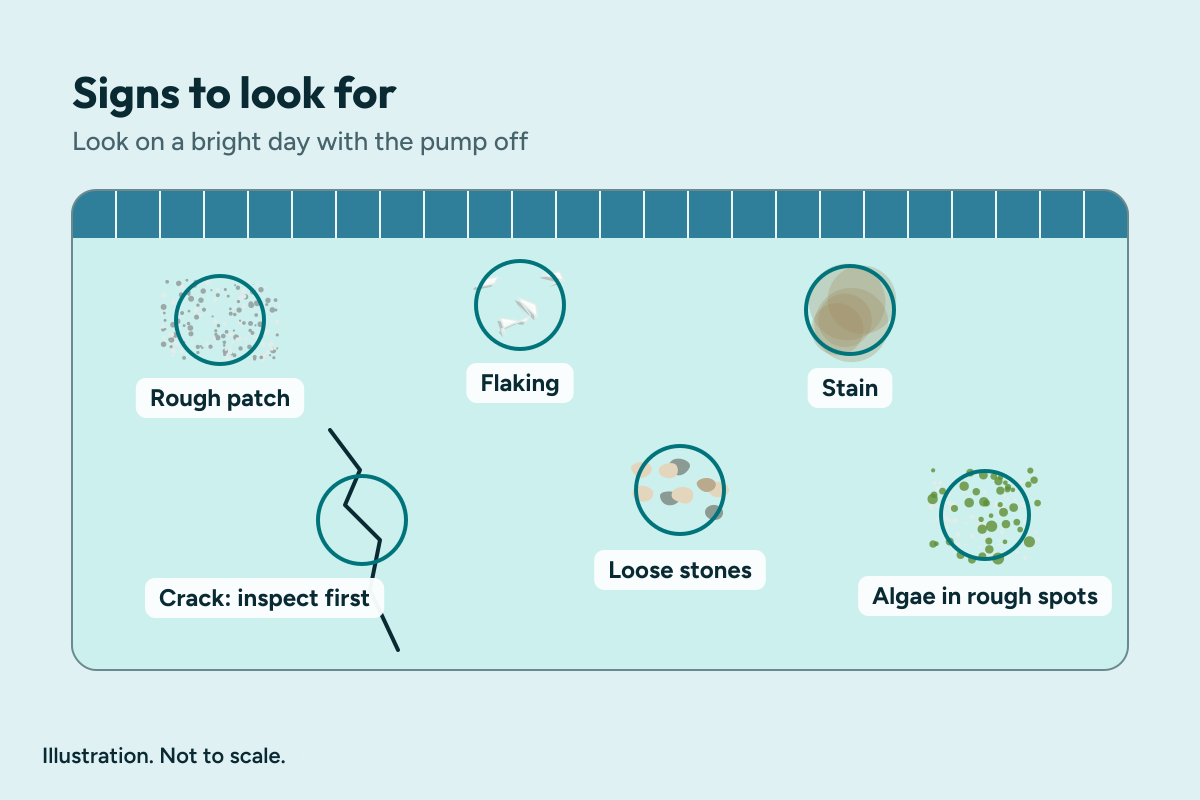
- Check the surface. Run your hand over the walls and steps. Look for rough spots, flaking, stains that will not scrub off, cracks and loose stones. The surface check scores what you find.
- Find the cause of any water loss. If the pool loses water with no clear reason, ask for a leak check before a new finish. A new surface does not fix a leak.
- Check the license. Ask each contractor for a state license number and look it up on the state licensing site. Write down the license type and the date you checked.
- Get the scope and price in writing. The scope should name the finish, the prep, the tile and coping work, the refill and start-up plan, and the warranty. Compare scopes line by line, not only the total.
What we don't handle
This guide does not cover these jobs, and once a licensed provider is named, requests that include them will not be passed on.
- roof work
- retaining walls and seawalls
- pool deck or patio slab repair
- structural shell repair or a cracked pool shell
- pool lighting, bonding and other electrical work
- drain lines, sewer or main-drain replacement
- mold work
- waterproofing of decks or buildings
- elevated decks
- balconies
- building a new pool
- pool piping and plumbing
- public or commercial pools
- fiberglass pool gelcoat work
- vinyl liner replacement
What this guide gives you now
Plain answers about your pool surface, before you call any contractor. We do not do pool work, so nothing here is a sales pitch.
- A surface check you can do at the pool
The Pool Surface Condition Check walks you through what to look and feel for. It tells you whether to watch, plan or ask for an inspection. - Plain notes on each finish
Plaster, quartz, pebble, and the tile and coping at the edge. See how each one wears and what to ask about it on the finishes page. - A license check in a few minutes
Florida's contractor law lists pool interior refinishing in a pool contractor scope. The license guide shows how to look up any contractor on the state site. - A written scope to ask for
Ask any contractor to write down the finish, the prep of the old surface, the tile and coping work, the start-up water care, the warranty and the price. Nothing should start until you agree in writing. - A timing plan for the Sarasota area
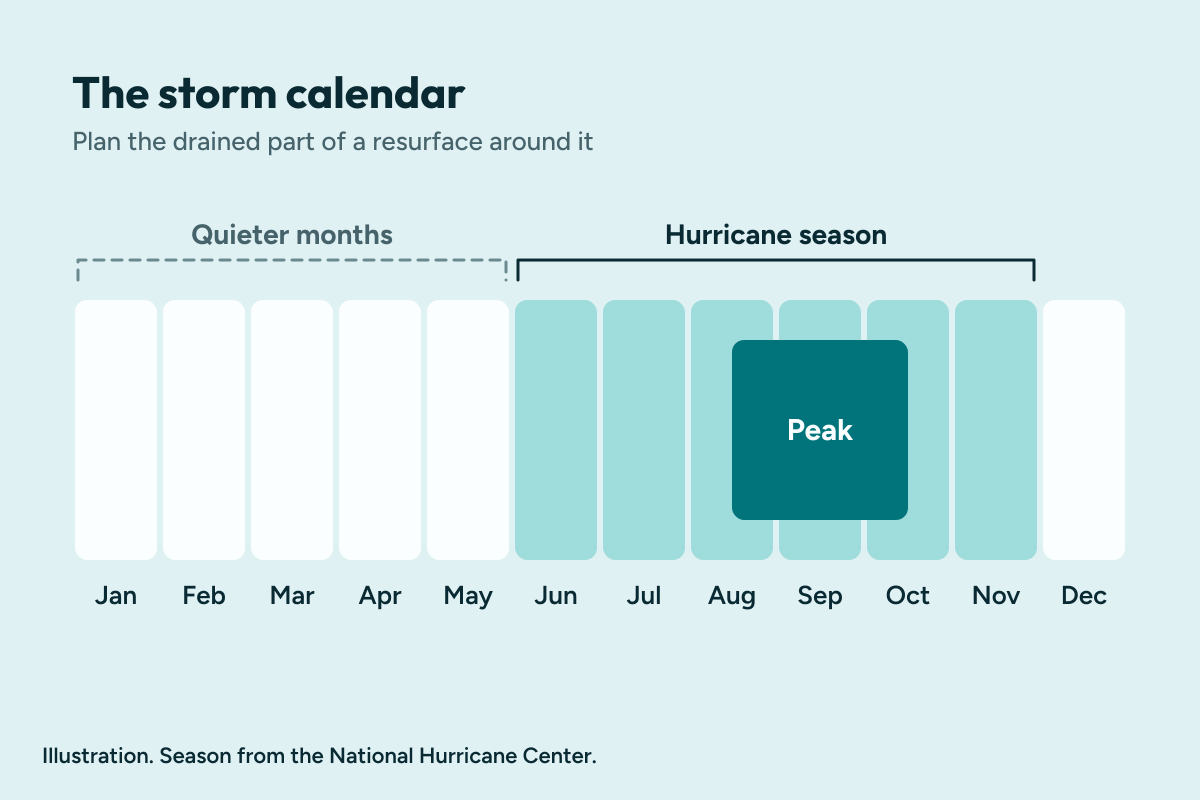
Draining a pool and storm season do not mix well. The timing guide lays out the storm calendar and the local watering order. - Water questions to ask
Tap water is treated differently from one utility to the next. Ask your utility for its water report, and ask your contractor how they will balance your fill water after the new finish goes on.
This site is free to read. It sells no pool work and takes no payment. Any work is agreed in writing between you and the licensed contractor who does it. If you see cracks in the pool shell, a licensed contractor should inspect it before anyone talks about a new finish.
Pool Surface Condition Check
Look at the pool on a bright day with the pump off, then answer each question. The result shows a stage and the answers that counted most. It is a starting point, not a price and not a diagnosis.
Start the Pool Surface Condition CheckSarasota Pool Refinishing is a guide run by Terragroupe, LLC. We do not resurface pools or do any pool work, and we are not taking requests yet. A licensed pool contractor does this work, and we are lining one up.
Pool tile and coping in Sarasota Area: cities
Other services
Illustration Plaster and marcite resurfacing
The classic smooth white finish. It costs the least of the main finishes and wears out first.
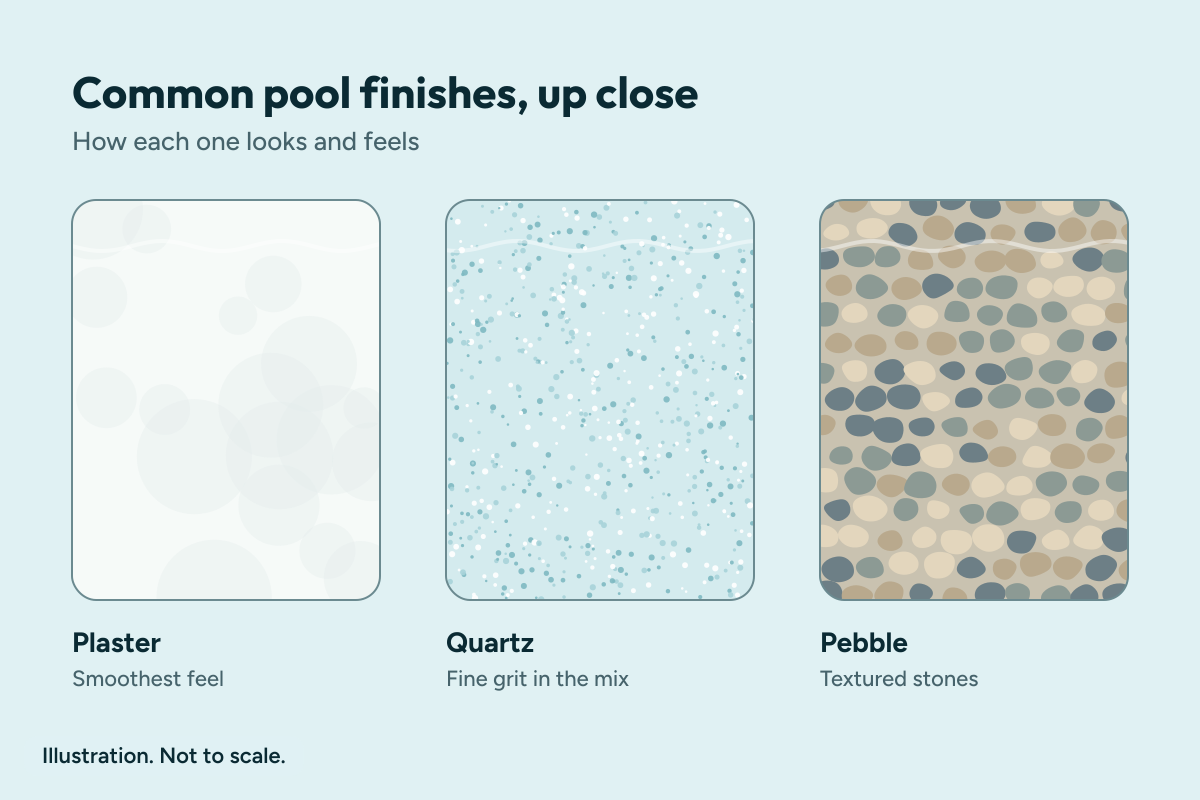
Illustration Quartz pool finishes
A plaster-type finish with quartz in the mix. It sits between plaster and pebble on lifespan.
Illustration Pebble pool finishes
Small stones set in the surface. The longest-lasting of the main finishes, with a textured feel.
Guides
Evidence: the facts and sources behind this page
Pool tile and coping: facts behind this page
As of October 18, 2026
| Fact | Value | Source |
|---|---|---|
| Bob Vila's pool resurfacing guide says an all-tile pool finish lasts about 20 years.An older national guide (2022). It is for a tiled pool interior, not waterline tile alone. | about 20 years (national guide figure) | [1] July 26, 2022 |
| Florida s. 489.105(3)(l) defines the Swimming Pool/Spa Servicing Contractor scope to include interior refinishing and substantially or completely draining a pool for repair or renovation. | interior refinishing is in the servicing scope | [2] 2026 (2026 Florida Statutes online edition) |
| Under s. 489.105(3)(j) (commercial) and (k) (residential) pool/spa contractors may build, repair and service pools, including installing interior finishes, and everything in the servicing scope. Direct sanitary-sewer and potable-water connections are excluded. | resurfacing is within scope of all three pool categories | [2] 2026 (2026 Florida Statutes online edition) |
| Section 489.117(4)(a)1 lists 'plastering' among job scopes a local government may not license, while 489.105(3)(l) names pool interior refinishing as a licensed pool scope. | possible overlap: plastering vs pool interior refinishing | [3] 2026 (2026 Florida Statutes online edition) |
| Section 489.103(7) lets an owner act as own contractor on a one- or two-family home for the owner's own use, with a one-year sale presumption. The subsection does not mention pools; whether it covers interior pool refinishing is not stated. | no explicit pool language | [4] 2026 (2026 Florida Statutes online edition) |
| DBPR's 'Understanding DBPR Codes' page lists CPC as Certified Pool/Spa Contractor (occupation code 0607) and RP as Registered Pool/Spa Contractor (0621), each with classes A (Commercial Pool/Spa Contractor), B (Residential Pool/Spa Contractor) and C (Pool/Spa Contractor Service). It does not explain what 'certified' and 'registered' mean for a license. | CPC (certified) and RP (registered); classes A, B, C | [5] undated (retrieved October 19, 2026)As of October 19, 2026 |
| DBPR's code list also shows certified specialty contractor (0612) classes PFC (Swimming Pool Finishes Specialty Contractor), PLL (Plaster and Lath Specialty Contractor), RPS (Residential Pool/Spa Servicing Contractor), PPC (piping), PSC (structural), PTC (trim), PDC (decking), PEC (excavation) and PLC (layout). | PFC = pool finishes specialty; RPS = residential pool/spa servicing | [5] undated (retrieved October 19, 2026)As of October 19, 2026 |
| In the 2026 Florida Statutes, s. 489.105(3)(j) (commercial) and (k) (residential) pool/spa contractors cover building, repairing and servicing pools and installing interior finishes; (l) the swimming pool/spa servicing contractor covers repair and servicing, names 'interior refinishing' and substantially or completely draining a pool for repair or renovation, and excludes direct sanitary-sewer and potable-water connections. Installing or replacing permanently attached water treatment or cleaning equipment needs a license; chemical-only water treatment and cleaning that does not affect structural integrity do not. | (j),(k) interior finishes; (l) interior refinishing and draining | [2] 2026 (2026 Florida Statutes online edition)As of October 19, 2026 |
| DBPR's online license search at www.myfloridalicense.com/wl11.asp lets anyone search by name, license number, city or county, or license type. | search by name, number, city/county or type | [6] undated (retrieved October 19, 2026)As of October 19, 2026 |
Sources
- Pool Resurfacing Cost: Project Budgeting Guide - Bob Vila, July 26, 2022
- Florida Statutes, section 489.105 (definitions, pool and spa contractor scopes), Online Sunshine, 2026
- Online Sunshine, Florida Statutes: s. 489.117, 2026 (2026 Florida Statutes online edition)
- Online Sunshine, Florida Statutes: s. 489.103, 2026 (2026 Florida Statutes online edition)
- Understanding DBPR Codes (Florida DBPR MyFloridaLicense.com), undated (retrieved October 19, 2026)
- Verify a License (Florida DBPR Licensing Portal), undated (retrieved October 19, 2026)
Questions people ask
Should I replace the tile when I resurface?
If the tile is near the end of its life, doing it in the same drain can save a second one. If it is sound, cleaning may be enough. Ask the contractor to show you what they see.
What is pool coping?
It is the cap along the top of the pool wall, between the water and the deck. It is often stone, brick or concrete. Cracked or loose coping should be checked before a new finish goes on.